
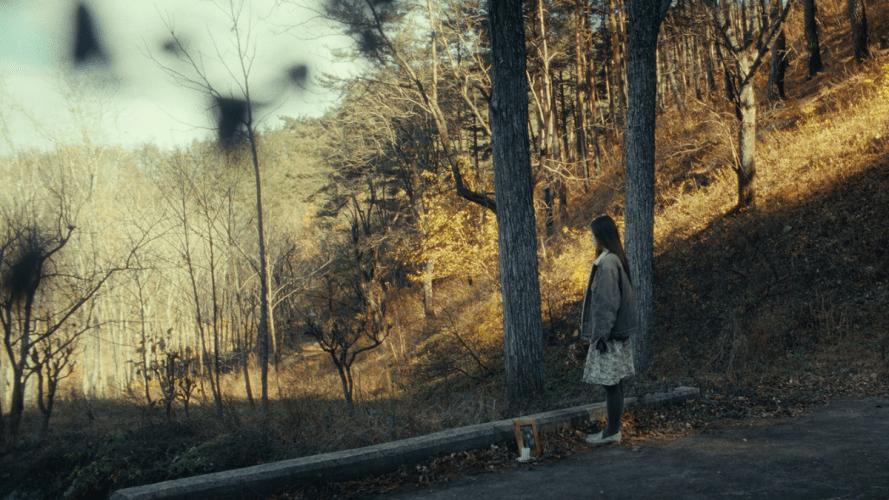
Here are my thoughts on Baljjeo, directed by DGGYANG and screened during the Bucheon International Fantastic Film Festival (BIFAN), which took place from July 3 to 13, 2025, in South Korea.
Baljjeo is the feature-length debut of DGGYANG, a South Korean actor turned director, who immerses the viewer in a family drama infused with folkloric and religious elements, making it an outstanding suspense film. The movie, which had its world premiere at BIFAN 2025, revisits themes explored in his first short film Nuzabar—particularly guilt, grief, and redemption—while enriching the narrative with elements of Korean shamanism and occult traditions.

The plot is simple but unfolds slowly, with intriguing narrative twists. A family receives a terrible prophecy from a shaman: “When Mirim turns twenty-six, she will go blind.” Panicked, Mirim’s parents decide to carry out an unorthodox and morally questionable ritual. They adopt a boy named Jinkoo, who is destined to carry Mirim’s curse. In doing so, they avoid the original omen—but at a terrible cost: Jinkoo dies in an accident, and Mirim is left consumed by guilt, as she secretly loved her half-brother.
Years later, a mysterious wanderer appears at Mirim’s home and tells her he has the power to be a bridge between the world of the living and the dead. Intrigued and longing for redemption, Mirim asks him to connect her with her deceased brother. However, we soon discover the true intentions of this enigmatic shaman.

Baljjeo may be one of the best examples of how to craft an excellent suspense/horror film using folkloric elements without resorting to clichés or cheap visual tricks (like jump scares, gore, etc.) to keep the viewer tense and engaged. The film also features a good mise-en-scène, where the cinematography, lighting, and music, blend together to create an atmosphere that gradually builds tension until the film’s climactic point. Another highlight is the excellent acting by Kwon Ipsae (who plays Mirim), Jeon So-Hyun (Grandma Baek), and DGGYANG himself (who plays Mirim’s brother).
The story explores the impossibility of escaping fate, even at the cost of great sacrifice. It is ultimately the main character’s guilt, her hope for redemption, and her desire to ask for forgiveness that end up closing the circle and fulfilling the original prophecy. Another line of thought could be how individualism and the desire for self-preservation—so prevalent today—can end up harming others. In some ways, this film echoes the classical Greek tragedy Oedipus Rex by Sophocles, which also delves into themes of guilt, fate, and both literal and symbolic blindness.
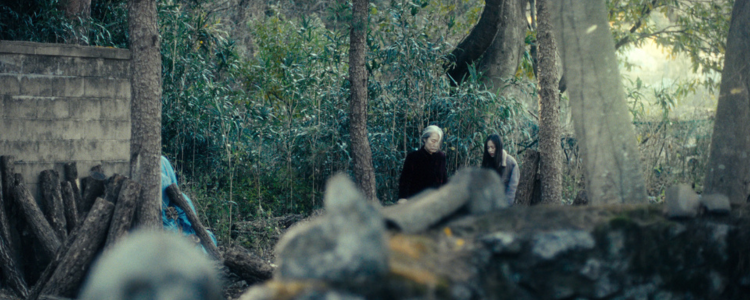
It’s worth noting that the film’s title, Baljjeo, refers to a colloquial shamanic term linked to Princess Bari, a foundational myth in Korean shamanism. In the tale, Bari is the seventh daughter of a king who, disappointed by not having a son, decides to abandon her. She is raised by forest spirits. Years later, the king falls ill, and no medicine can cure him—only the waters of the underworld can save his life. Bari embarks on a harrowing journey to the underworld to retrieve the water of life and save her dying father. In the end, she sacrifices her return to the world of the living to fulfill her mission. Although this myth is never mentioned explicitly in the film, the director has acknowledged that Princess Bari was a central inspiration.
Thematically, Baljjeo aligns with the rising wave of Korean films dealing with spiritual horror. In this context, one might cite feature films such as The Wailing by Na Hong-jin (2016) and Exhuma by Jang Jae-hyun (2024). However, unlike these larger-scale productions, Baljjeo keeps its runtime to 60 minutes—something that is much appreciated. It’s also worth mentioning two Korean short films that deal with similar themes like guilt, fate, and revenge while incorporating religious elements: Forest of Echoes by Yoori Lim (2023) and Vortex by Jae-woo Jang (2024).
With a solid debut, DGGYANG positions himself as part of a new generation of young directors making bold and distinctive cinema.
Trailer:
Disclaimer: The images included in this article are courtesy of the festival and are used for illustrative purposes only. All rights remain with their respective owners.
Categories: Review



 Asian Film Festivals